
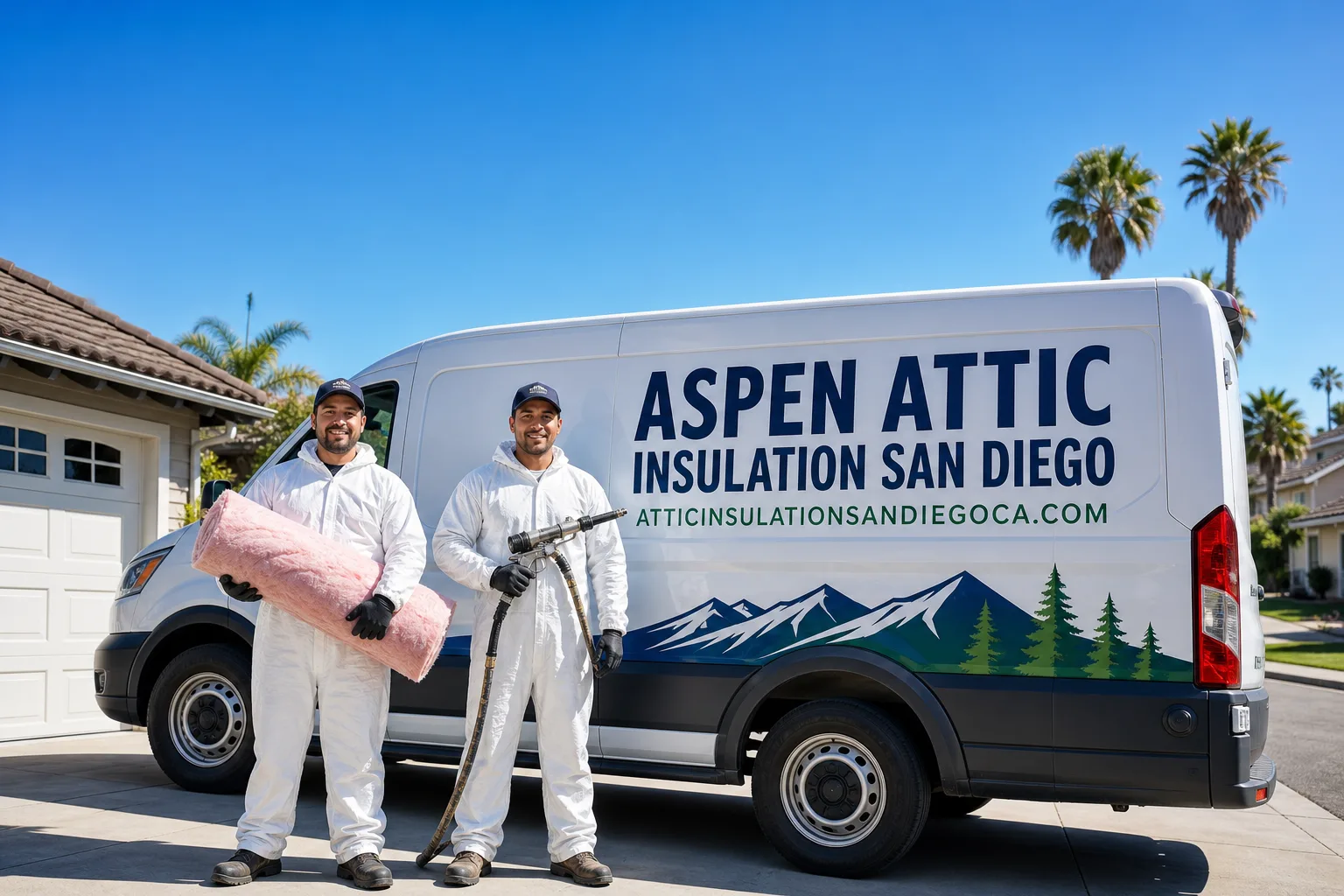
Fast, Reliable Attic Insulation Across Coronado
Attic insulation in Coronado costs $1,650 to $3,900 for a typical 1,200 to 1,800 square-foot home, with blown-in cellulose or fiberglass on the lower end and closed-cell spray foam on the higher end. Most Coronado jobs are finished in a single day, and we answer the phone 24/7 at (858) 282-0169 to get yours scheduled. The salt air and persistent fog around the island change what your attic needs compared to an inland house. We have worked on Coronado attics long enough to know that the first thing to fail is rarely the insulation itself. It’s the air sealing and ventilation around it, and the moisture that sneaks in through places nobody looks until stains show up on a ceiling.
If you live in the Village, near the Coronado Golf Course, or out toward the Shores, you already know what the marine layer does to wood, paint, and metal. Your attic is no different. The fix is not more insulation. It’s the right insulation, installed with the right air barriers for a coastal house that fogs in every spring. Call (858) 282-0169 and we’ll put a written price in front of you before any work starts.
Why Aspen Attic Insulation San Diego Is Coronado’s Preferred Attic Insulation Company
Garrett Sloane runs our Coronado work, and he’s the name you’ll see on the bid. Every technician we send onto Coronado has been background-checked, identity-verified, and arrives in a marked uniform with a photo ID badge at the door. Before the visit, you get the tech’s name and photo by text or email. That is the Threshold Standard, and it’s not optional. If the person at your door doesn’t match the photo we sent, the visit is free and we make it right.
Coronado homeowners hear a lot of sales pitches. Ours is simpler: the price we put in writing is the price you pay, covered by our 365-Day Done Right Promise. If something isn’t right within a year, we come back and fix it at no charge. We service the whole island, from the historic homes south of Orange Avenue to the newer construction near the Silver Strand. Living on Coronado means your attic deals with fog, salt, and humidity that most insulation crews in San Diego never think about. We think about it on every job.
Attic Ventilation in Coronado
Attic ventilation in Coronado is the difference between a dry attic and one that sweats through every fog season. In Coronado’s mild marine climate, heat isn’t the main enemy. The problem is that cool, damp, salty air moves through soffit vents and ridge vents all night, then condenses on the underside of the roof deck and on anything cool. If the attic can’t dry out during the day, that moisture works its way into insulation, fasteners, and eventually the plaster ceilings below.
Why coastal attics need more than code-minimum venting
National building codes are written for inland climates. A 1:150 vent ratio that works in El Cajon is often insufficient for a Coronado attic that sits in fog for weeks at a time. We install baffles that keep blown-in insulation from blocking the soffit vents, and we size the net free vent area for the actual humidity load, not just the square footage.
Corrosion-resistant baffles and screens
Coronado’s salt air corrodes standard aluminum vent screens in four to six years. We use stainless steel or heavy-gauge coated screens and nylon baffles that don’t rust through. Typical attic ventilation work in Coronado runs $450 to $1,300 depending on access and how much existing venting needs correction. Call (858) 282-0169 for a written number before we open a tool bag.
Radiant Barrier in Coronado
A radiant barrier in Coronado works differently than it does inland, and for some Coronado homes it’s the wrong product entirely. In a hot, dry climate, a radiant barrier stapled to the underside of the rafters reflects heat back out before it ever reaches the insulation. In Coronado, daytime heat is less intense, but the same foil layer can trap moisture if it’s installed against the roof deck without an air gap, which is a common mistake from crews who don’t understand coastal humidity.
When a radiant barrier makes sense by the coast
Homes facing west, particularly single-story homes near the Shores or the golf course, still get real solar gain in summer. For those, a perforated radiant barrier installed with a true air space reduces attic temperatures by 15 to 25 degrees without becoming a condensation trap. We typically pair it with upgraded ventilation so warm, moist air always has an exit path.
What we won’t install here
Unperforated foil against the sheathing, in a Coronado attic with fog rolling through nightly, is a recipe for hidden rust and mold inside the roof assembly. Garrett Sloane will tell you if a radiant barrier is worth it on your specific roof or if you’re better off spending the money on air sealing and a thicker R-value. Expect $1,800 to $4,200 for a full radiant barrier retrofit on a 1,500 square-foot attic, depending on roof pitch and access. We put the whole number in writing before any work begins.
Trusted Brands We Service in Coronado
We stock and install insulation from Owens Corning, Johns Manville, GreenFiber, and CertainTeed on Coronado jobs, among others. GreenFiber cellulose is a frequent choice for Village-era homes because it’s dense, easy to blow into irregular old attics without disturbing original plaster. CertainTeed fiberglass batts go into walls where we’re opening small cavities for retrofit work. Icynene and Demilec closed-cell spray foam handle areas where we need both air sealing and an R-value boost in a tight space, like a low-slope roof over a Spanish Colonial Revival sunroom. Whatever the house needs, we match the material to the problem, not to whatever is left in the truck. If you need a specific brand or have a spec from an energy audit, we’ll meet it. Call (858) 282-0169 to talk it through.
Common Attic Insulation Problems We See in Coronado Homes
- Condensation stains under the eaves in Village-era homes. The houses near the Village that don’t show those gray streaks after a foggy spring are the ones that were air sealed properly. Unsealed attic bypasses let humid ocean air condense on cool plaster, and the stain is the last sign of a process that’s been running for months.
- Salt-corrupted vent screens and fasteners. Within five or six years, standard aluminum soffit screens on a Coronado attic start to crumble. When screens fail, birds and rodents get in, and when baffle fasteners rust, the baffles sag and block the airflow they were installed to protect.
- Compressed fiberglass batts from previous retrofits. Older Coronado homes went decades without insulation. When a previous owner finally added some, the crew often laid batts over wiring, plumbing, and top plates instead of cutting around them. Compressed fiberglass loses half its R-value and holds moisture, which makes condensation worse, not better.
- Original plaster cracking when insulation is added wrong. In early 20th-century Craftsman and Spanish Colonial Revival homes, plaster and lath are load-bearing in a way drywall isn’t. Blowing dense-pack insulation behind them improperly can stress the plaster keys and cause hairline cracks. We preserve the original plaster by controlling fill density and drilling from the outside where possible.
Pricing for Attic Insulation in Coronado, CA
For a typical Coronado home of 1,200 to 1,800 square feet, blown-in cellulose runs $1,650 to $2,900. Fiberglass batts in a similar attic are $1,800 to $3,300. If the house needs air sealing, which most Coronado attics do, add $600 to $1,400. Closed-cell spray foam for a flat or low-slope roof section runs $3,500 to $7,800 depending on square footage. A full attic insulation top-up on an already-insulated home, where we just add R-value to bring it to current code, runs $900 to $1,700. Houses with difficult access, very old wiring, or knob-and-tube wiring will be higher because of the prep work involved. Every estimate is written, itemized, and delivered before any work starts. Call (858) 282-0169 for a free estimate on your Coronado home.
We Also Serve Cities Near Coronado
Our Attic Insulation crew regularly handles jobs across the bridge in Coronado‘s neighboring communities: San Diego, National City, Chula Vista, and Imperial Beach. If you’re a Coronado homeowner with a rental property or a second home in one of those areas, call (858) 282-0169 and we’ll coordinate a single visit for both properties.
Serving Coronado, CA - Our Local Coverage Area
We’re based in the Coronado area and know this community well. Use the map below to see our service coverage - if you’re nearby, we can almost certainly help.
FAQs About Attic Insulation in Coronado
Humid ocean air gets pulled into attics through gaps around top plates, recessed lights, and old vent screens, then condenses on cool plaster ceilings and roof sheathing. In a Craftsman with original plaster, that condensation shows up as stains under the eaves and, eventually, as mold inside wall cavities. The fix is air sealing first, then insulation. Call (858) 282-0169 and we’ll explain what your attic specifically needs.
For most Spanish Colonial Revival homes in Coronado, blown-in cellulose is the best balance of R-value, cost, and compatibility with old framing. It fills irregular cavities without requiring us to open walls, and it doesn’t hold moisture the way compressed fiberglass does. In specific roof sections with no venting, closed-cell spray foam may be the better call. We’ll put both options in writing with real numbers before you decide.
Yes. That’s the standard approach for Coronado’s historic homes. We drill small access holes from the attic side or exterior, blow in insulation at controlled density, and patch the holes discreetly. The original plaster and lath stay intact. We’ve done this on Village-era homes for years. Call (858) 282-0169 for a free assessment.
Because insulation without air sealing just hides the moisture problem instead of solving it. The stains appear when warm, humid attic air reaches a cool corner of the ceiling and drops its moisture. In Coronado’s fog season, that happens nightly unless the attic air paths are sealed and the venting is balanced. We seal top plates, wiring penetrations, and recessed lights before we add insulation, so moisture never gets a second chance.
Sometimes. A perforated radiant barrier installed with a true air gap helps on west-facing roofs that catch afternoon sun in the summer. But installed wrong, it traps moisture and rusts roof fasteners. We’ll tell you honestly if a radiant barrier is the right spend for your roof, or if you’re better off putting that money into more R-value and better venting. Estimates are free at (858) 282-0169, and the price is in writing before we start.
Whether you’re in a 1920s bungalow near Orange Avenue or a newer build off Avenida de las Arenas, your attic is working against salt air and fog every single day. We’ll tell you exactly what’s wrong, what it costs to fix, and who’s showing up at your door. Call (858) 282-0169 for a free estimate on attic insulation in Coronado.
Written by Garrett Sloane, Owner at Aspen Attic Insulation San Diego, serving Coronado’s attic insulation needs with a written price and a 365-day guarantee on every job.