
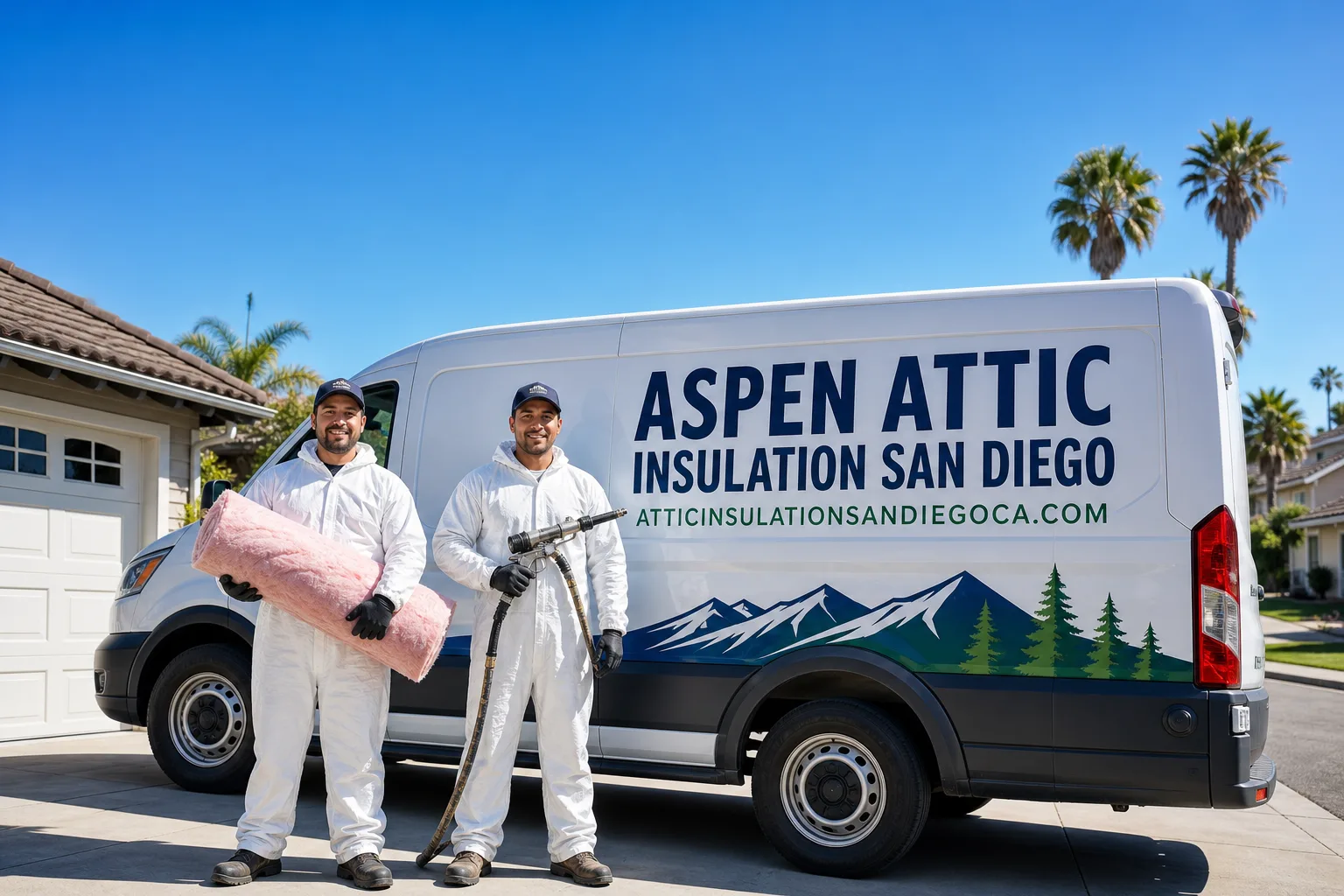
Fast, Reliable Blown In Insulation Across Coronado
Blown-in insulation in Coronado typically runs $1.80 to $3.60 per square foot installed, with most attic retrofits landing between $1,900 and $5,200 depending on depth, access, and whether air sealing is included. We dispatch crews to Coronado from our San Diego office, and most jobs in the Village and along First Street are scheduled within three to five business days. If you’re dealing with a cold, damp attic or moisture stains under the eaves, call (858) 282-0169 and we’ll send a technician you’ll know by name before he knocks.
Coronado homes are different from the rest of San Diego County. The salt air, the fog, the older plaster and lath construction, the red clay tile roofs. None of that responds well to a one-size-fits-all insulation job. Our Blown In Insulation team has worked in enough Coronado attics to know what holds up here and what doesn’t.
Why Aspen Attic Insulation San Diego Is Coronado’s Preferred Blown In Insulation Company
Garrett Sloane built this company on a straightforward idea: a homeowner should know exactly who’s coming to their house and exactly what the job will cost before any work starts. That matters even more in Coronado, where many residents are home alone during the day, have young kids, or simply don’t want a stranger showing up without warning.
Every technician we send to Coronado is background-checked, identity-verified, and arrives in a clean marked uniform with a photo ID badge. We send you the tech’s name and photo before the visit. If someone else shows up, the visit is free and we make it right. That’s the Threshold Standard, and it applies to every single job we do, from a small attic top-up near the Coronado Municipal Golf Course to a full retro-fill in a 1920s Spanish Colonial Revival off Orange Avenue.
Our Coronado customers also get the 365-Day Done Right Promise in writing. If the insulation settles, if an air seal fails, if anything isn’t done right, we come back and fix it free for a full year. Labor and materials. That’s not a verbal promise. It’s on paper, before the job starts.
Blown In Fiberglass Insulation in Coronado
Blown In Fiberglass Insulation is the most common retrofit we install in Coronado attics, and for good reason. Loose fiberglass fibers blown into the attic cavity fill every gap, around rafters, over cross-bracing, into the awkward corners where batts leave voids. In a Coronado home with an older roof and original framing, those gaps are where the damp ocean air gets in. A typical blown-in fiberglass attic job in Coronado runs $1.80 to $2.80 per square foot installed, not including air sealing.
Air Sealing Before the Blow
We won’t blow fiberglass into a Coronado attic without sealing the bypasses first. That means recessed light housings, plumbing chases, interior wall top plates, and especially the knob-and-tube wiring chases we find in pre-1940 homes around the Village. If you skip this step, the fiberglass settles into the holes and the attic keeps pulling damp air from the house below. We seal first, then we blow.
Attic Ventilation and Baffles
Coronado’s marine layer pushes moisture into attics from spring through early summer. Blown-in fiberglass needs a clear ventilation path under the roof deck, or that moisture condenses on the insulation and the framing. We install baffles at every rafter bay before blowing, preserving the airflow your white stucco and red tile roof was designed for. Skipping this is why some Coronado homes with insulation still smell musty every May.
Loose Fill Insulation in Coronado
Loose Fill Insulation is the broader category of blown material, fiberglass or cellulose, that we install in Coronado attics and some wall cavities. The difference from batts is coverage: loose fill settles into every irregular space, which matters in older Coronado homes where stud bays are 100 years old and nothing is square. Loose fill attic work in Coronado runs $1.60 to $3.20 per square foot, with wall cavity work on the higher end because it takes more time and care.
Cellulose in Historic Walls
We do dense-pack cellulose into wall cavities in some Coronado homes, but we’re careful with it. Original lath and plaster from the 1920s has plaster keys that grip the wood lath. Dense-packing at too high a pressure can crack the keys and damage ceiling medallions and crown molding. We run lower pressure and we check the plaster as we go. If the walls aren’t good candidates, we’ll tell you before we start.
Moisture and Vapor Barriers
Many Coronado homes predate modern vapor barrier codes. Blowing loose fill into those attics without correcting the moisture path first means hidden condensation on the underside of original plaster ceilings. We assess each attic for existing vapor barriers, or lack of them, before recommending material and depth. In some cases, a closed-cell spray foam air seal at the attic floor is the better first step, then loose fill on top.
Trusted Brands We Service in Coronado
We stock and install blown-in materials from Owens Corning, CertainTeed, and GreenFiber, along with spray foam products from Icynene and Demilec when a Coronado job calls for it. The reason we carry multiple brands isn’t marketing. A 1926 home with original red clay tile needs a different vapor approach than a 2015 custom build near the Coronado Shores. We match the material to the house. And unlike a company that has to order parts, we keep most common materials on hand for fast turnaround on Coronado jobs.
Common Blown In Insulation Problems We See in Coronado Homes
- Settled fiberglass in knob-and-tube wiring chases. Older Coronado homes with original electrical often have open chases where the wiring runs through top plates. We’ve pulled back settled fiberglass in Village attics and found a two-inch gap around the chase pulling salt-damp air straight into the attic all summer. We seal those before anything gets blown in.
- Condensation staining under the eaves during fog season. Unsealed attics in Coronado collect condensation on the underside of the roof deck every May and June. That water runs down and wets the plaster at the eaves. The fix is air sealing and proper baffles before insulation, not more insulation.
- Corrosion on original window sashes and door hardware. Using vapor-permeable loose fill directly against salt-laden stucco walls without a dedicated vapor barrier allows salt moisture to migrate into the wall cavity and corrode original steel and brass hardware. We see this in Spanish Colonial Revival homes all over Coronado. The material choice matters more than the R-value.
- Plaster cracks from over-pressurized dense-packing. We’ve repaired the fallout from other companies’ work: walls blown too hard, plaster keys overloaded, cracks running through original ceiling medallions. On a Coronado home with original lath and plaster, the pressure and pace of the install is the difference between a clean job and a cracked ceiling.
Pricing for Blown In Insulation in Coronado, CA
Here’s what Coronado homeowners should expect. Attic blown-in fiberglass runs $1.80 to $2.80 per square foot installed. Attic loose fill cellulose runs $1.60 to $3.20 per square foot. Wall cavity dense-packing runs $2.50 to $3.60 per square foot. Air sealing runs $400 to $1,200 depending on the number of bypasses and the attic access. A full attic retrofit on a 1,500-square-foot Coronado home typically lands between $3,200 and $5,500 including air sealing and baffles. Older homes with original plaster and tight access run higher. You’ll get a written price before any work starts, always, no exceptions. Call (858) 282-0169 for a free estimate.
We Also Serve Cities Near Coronado
While this page focuses on Blown In Insulation in Coronado, our crews also serve San Diego, National City, Chula Vista, and Imperial Beach. If your home is on the edge of Coronado or you own a rental across the bridge, we can help. Same Threshold Standard, same written price guarantee.
Serving Coronado, CA - Our Local Coverage Area
We’re based in the Coronado area and know this community well. Use the map below to see our service coverage - if you’re nearby, we can almost certainly help.
FAQs About Blown In Insulation in Coronado
We air seal the attic floor and install baffles at every rafter bay to maintain the ventilation path under the red clay tile, then blow in the insulation. The tile roof itself is not the problem; the problem is that Coronado attics without baffles and air sealing trap the marine layer moisture against the roof deck, and that water condenses and drips onto the insulation and plaster. With proper sealing and ventilation first, blown-in fiberglass or cellulose works fine under clay tile. Call (858) 282-0169 and we’ll assess your attic’s specific ventilation before recommending anything.
Yes, but it has to be done at lower pressure and with constant visual checks on the plaster keys. We’ve dense-packed cellulose into walls of 1920s Spanish Colonial Revival homes in Coronado, including homes with original ceiling medallions, without cracking the plaster. The key is not rushing and not over-pressurizing. Some walls are not candidates, and in those cases we’ll tell you that the risk outweighs the gain. A trained tech who knows lath and plaster matters more than the machine settings.
Most Coronado homes are well served by R-38 in the attic, which is roughly 12 to 14 inches of blown fiberglass or 10 to 11 inches of settled cellulose. The mild coastal climate means you don’t need R-60 like a mountain cabin does. What matters more in Coronado is the air sealing and vapor management. A house with R-38 and proper air sealing will outperform a house with R-49 and unsealed bypasses, every time. We’ll recommend the right depth for your specific attic, not just sell you the highest number.
Yes, but only if the attic is air sealed and ventilated before the insulation goes in. The musty smell is condensation, not the insulation itself. Unsealed attics in Coronado pull warm, humid air from the house, and when that air hits the cool underside of the roof deck during spring fog, it condenses and feeds mildew. Air sealing stops the airflow, baffles restore the ventilation, and then the blown-in insulation keeps the house air where it belongs. We’ve done this exact fix on homes in the Village and the smell doesn’t come back.
Because the insulation was installed without addressing the ventilation and air sealing first. In the Village area, you can tell which older homes have had proper insulation retrofits because you won’t see the telltale moisture stains under the eaves after a foggy spring. Unsealed attics collect condensation that wets the plaster. We retrofitted a 1926 Spanish Colonial Revival near Orange Avenue where the homeowners had been repainting moisture stains every spring; after we air-sealed the original tongue-and-groove ceiling, installed baffles to preserve the red clay tile roof’s ventilation path, and blew in Owens Corning AttiCat fiberglass, the plaster stayed dry through three consecutive fog seasons.
Call Aspen Attic Insulation San Diego for Blown In Insulation in Coronado
You’ll know who’s coming before they knock. You’ll have a written price before any work starts. And the job is covered in writing for 365 days. That’s how we work in Coronado. Call (858) 282-0169 for a free estimate, answered by a live person, 24/7.
Written by Garrett Sloane, Owner at Aspen Attic Insulation San Diego, serving Coronado since 2002.